

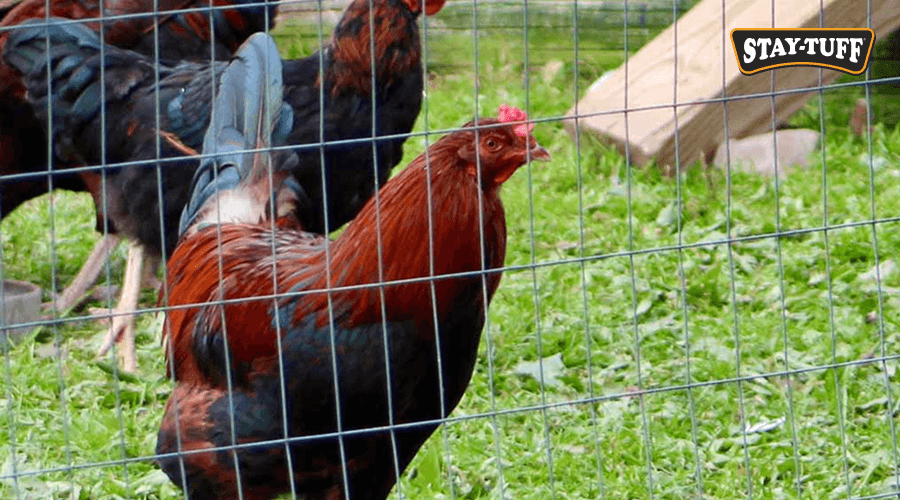
Welded Wire Fence Guide
How to Choose the Right Gauge, Mesh, and Coating
If you are shopping for a welded wire fence, you have probably noticed the choices add up fast: gauge, mesh size, height, roll length, and coating all change the price and how long the fence holds up.
This guide walks you through the key factors that determine how a welded wire fence performs—from wire gauge and mesh size to coating, roll length, and post spacing—so you can choose the right fence for your application and get the job done right the first time.
What is a welded wire fence?
A welded wire fence is made from steel wires laid in a grid and fused with a small tack weld at every point where a horizontal and vertical wire cross. That weld is what separates it from woven or “field” fence, where the wires are knotted or twisted together instead.
Those welds give the fabric its signature trait: rigidity. A welded wire panel or roll maintains a consistent, square mesh pattern and resists pushing and sagging far better than a loose-woven product.
That rigidity makes welded wire a versatile choice for applications ranging from gardens, pet enclosures, and animal cages to farm and property barriers where a clean, uniform structure is important.
Welded wire fence gauge: what the number really means
Wire gauge measures thickness, and it works backwards: the lower the number, the thicker the wire.
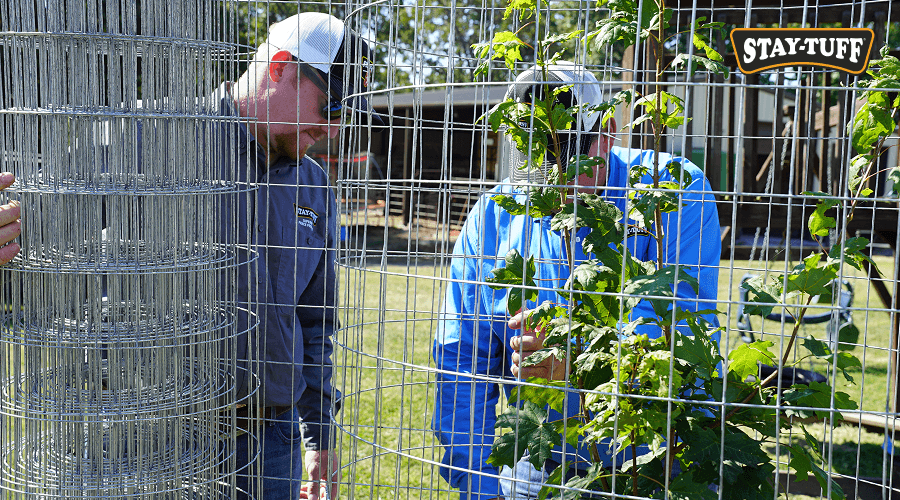
STAY-TUFF’s Welded Wire Fence, made with galvanized wire, is available in 12.5-gauge and 14-gauge wire. This is a versatile, affordable solution for:
- Rigid enclosures for pets and small animal cages
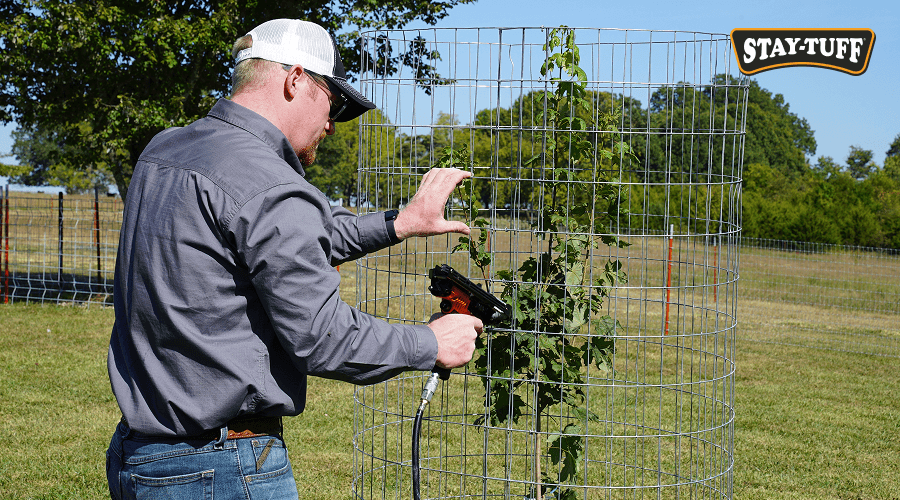
- Tree and plant guards
- Bird feeders, garden fencing
- Kick panels on screen doors
Coating is what determines a long life
The type and quality of the coating play an important role in how long your welded wire fence performs in the field.
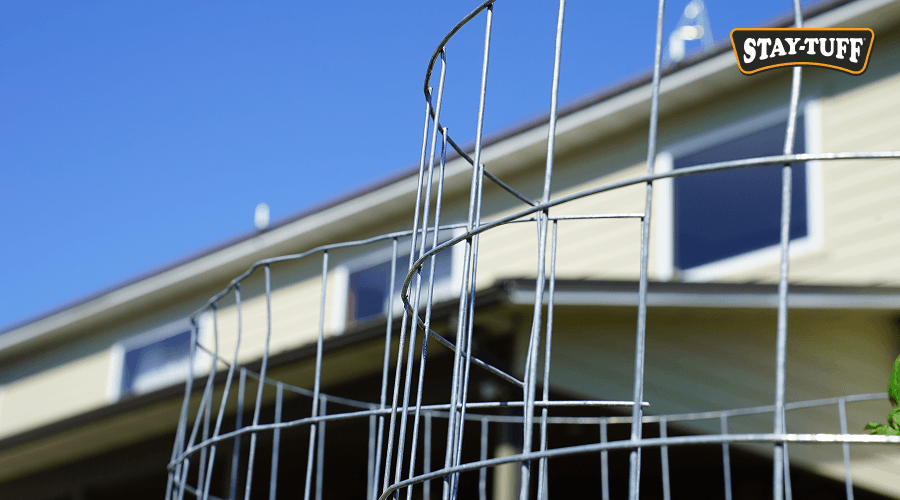
STAY-TUFF’s welded wire fence is galvanized to help protect the steel wire from rust and corrosion and extend the life of the fence.
Learn more about STAY-TUFF solutions by clicking here.
How far apart should posts be for a welded wire fence?
There is no single legal “standard,” but field-tested ranges are well established.
Post spacing varies by fence design, wire gauge, mesh height, soil conditions, and local wind exposure. As a general guideline, posts may be spaced 6 to 10 feet apart, but always follow the manufacturer’s installation recommendations for your specific fence.
There are, however, two non-negotiables regardless of gauge: set posts deep, and beef up your corners. Post depth depends on the fence design, post height, soil conditions, and local climate. As a general guideline, line posts are often installed at least 24 inches deep, while deeper installation may be necessary in areas with challenging soil or frost conditions. End and corner posts carry all the tension and should be noticeably more robust than your line posts.
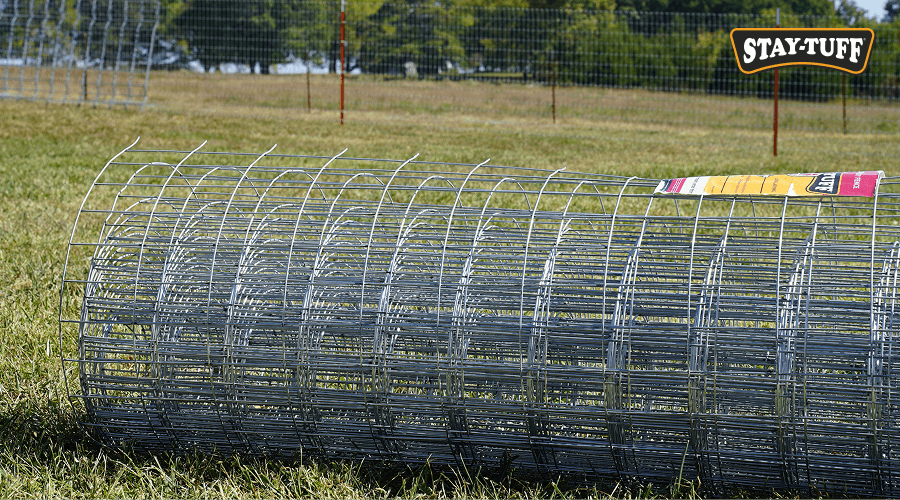
The STAY-TUFF difference: Depending on the product, application, and soil conditions, STAY-TUFF’s high-tensile wire can allow for post spacing of up to 25 feet, helping reduce the number of posts needed for certain fence installations.
Bottom Line: Choosing the right welded wire fence starts with the application
For the lawn, garden, pet, and small-animal projects most readers are tackling, the product we reach for is the STAY-TUFF Welded Utility Fence. It is one of Stay-Tuff’s most versatile wire products, built for a range of projects and applications, from guarding your pets to protecting your lawn.
Here is why it fits this use case so well:
- Galvanized before welding for an extended lifetime against rust and corrosion.
- Smooth, flush-cut cross wires help reduce sharp protrusions that can snag pets, clothing, or equipment.
- A versatile 2×4 mesh that keeps small animals in and predators out while staying easy to see through
Frequently asked questions
How long does a welded wire fence last?
A properly installed galvanized welded wire fence can provide years of reliable service, but its lifespan depends on factors such as coating, wire gauge, climate, soil conditions, and exposure to moisture.
How far apart should posts be for a welded wire fence?
Typically, posts are set 6 to 10 feet apart, tightening to 6–8 feet for wind areas. Set line posts at least 24 inches deep and use heavier corner and end posts. Depending on soil conditions, STAY-TUFF allows for a 25′ post separation.
Where can I buy heavy-gauge welded wire?
STAY-TUFF sells its welded utility fence and full fence lineup through a nationwide network of authorized dealers. Discover one near you by clicking here.