

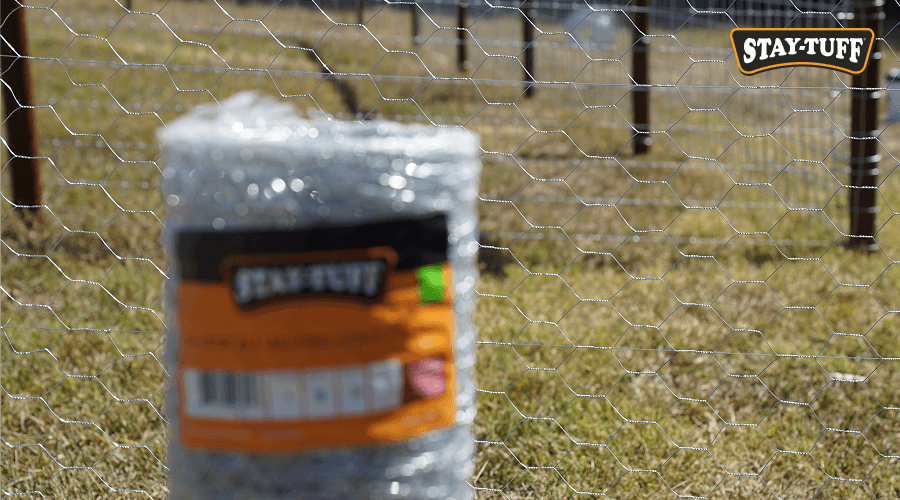
Chicken Netting
Choosing the right mesh for your project
If you keep chickens, the netting you choose does more than mark the boundary of your run. It determines whether your birds stay where they belong, whether predators get in, how often you’ll be replacing fence material, and how much of your morning you’ll spend rounding up escapees instead of collecting eggs.
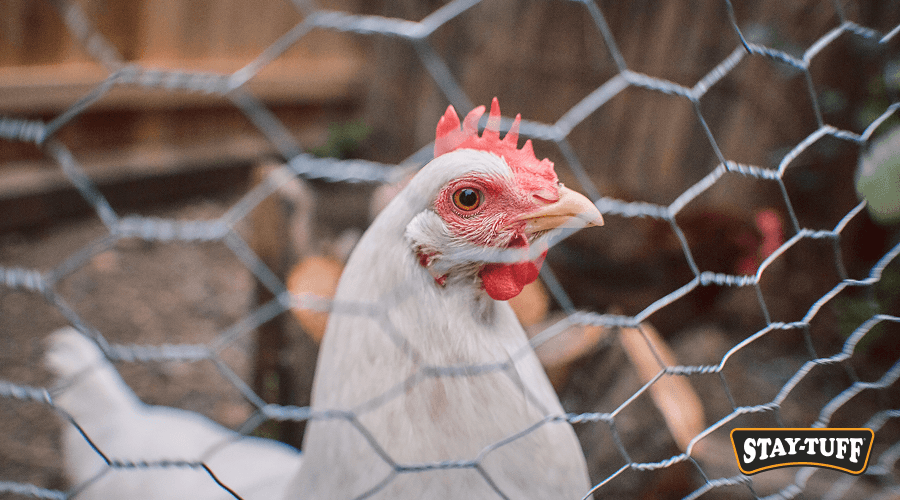
Chicken netting sounds straightforward, but it is often a misunderstood product. This guide fixes that.
We’ll walk through exactly how to pick the right hexagonal poultry netting, and where it works brilliantly.
What Is Chicken Netting?
Chicken netting is a flexible woven-wire mesh made from thin galvanized steel wire twisted into a hexagonal pattern.
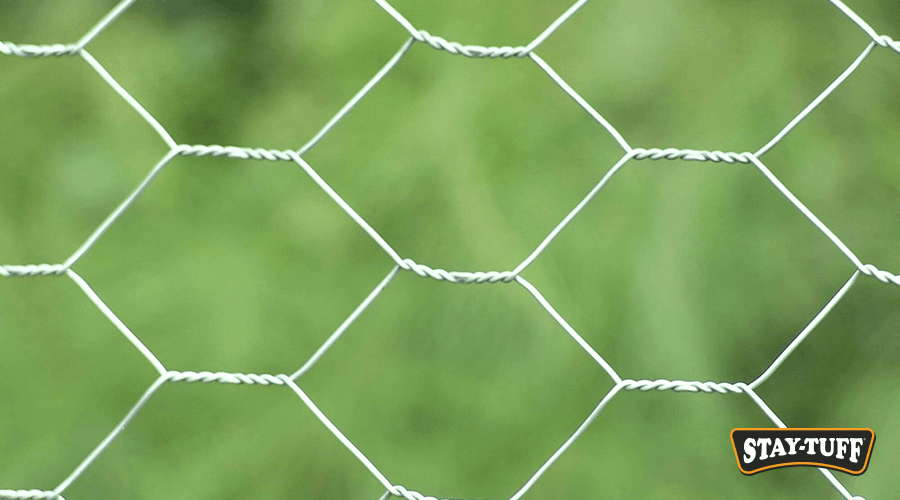
Each cell shares walls with six neighbors, which lets the netting flex without unraveling and conform to curved frames and uneven terrain.
Chicken wire is often used as edging or as a stifferner at the base of taller fencing, or for chicken runs and aviaries.
Compared to welded panels, hex netting is lightweight, cuts easily with snips, and wraps around posts and frames.
The Two STAY-TUFF Chicken Nettings
1″ Hexagonal Poultry Netting
The 1-inch Hexagonal Poultry Netting is Stay-Tuff’s tightest-mesh poultry product, engineered for serious containment of chickens, chicks, ducklings, quail, and other small birds and small animals.
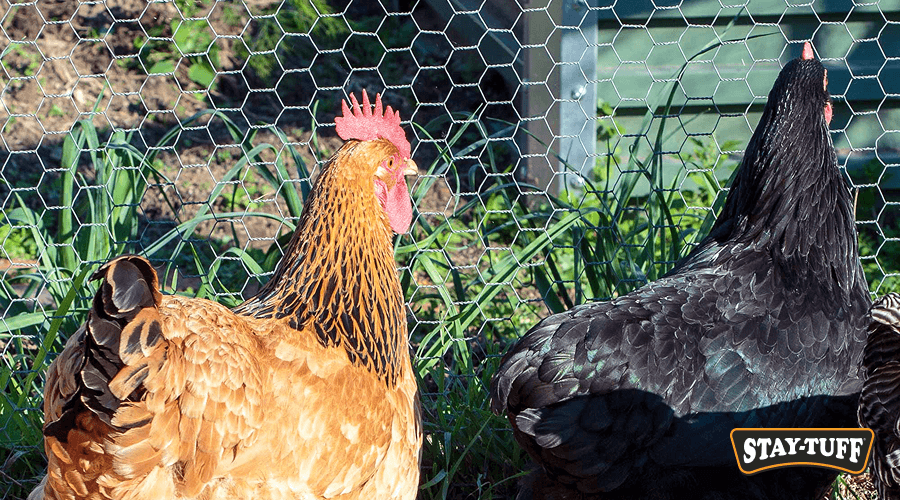
- Small 1″ openings prevent escape of small birds and chicks, and exclude rodents and small wildlife
- Galvanization prior to weaving fully coats the wire (including the twist points) for significantly longer service life
- Suitable for both commercial poultry operations and backyard flocks
Best applications:
- Chick brooders and starter pens
- Quail and pheasant aviaries
- Chicken coop walls and run sides
- Aviary ceilings
- Garden borders where you also need to exclude rabbits
The 1-inch mesh is the right choice when you have small birds, when small wildlife in your area is a concern, or when you want maximum reassurance that nothing is climbing through the holes.
2″ Hexagonal Poultry Netting
The 2-inch Hexagonal Poultry Netting uses the same galvanized 20-gauge wire but with a larger 2-inch hexagonal opening, making it lighter and easier to handle in long runs.

- 2″ mesh openings contain adult chickens and larger poultry while keeping the netting lightweight
- Galvanized wire lines provide rust resistance and a longer service life than unprotected wire
- Suitable for both commercial and residential applications
Best applications:
- Adult chicken run perimeter fencing where the run is also covered above
- Tree wrapping to protect young fruit trees
- Garden borders against larger animals
- Insulation retainers, stone wrapping, and storage bin construction
How to Choose the Right Chicken Netting: A Decision Framework
1. Identify Your Bird Size and Life Stage
- Chicks and bantams: 1″ mesh, minimum. The smaller openings prevent heads from getting stuck and exclude rodents that prey on chicks.
- Standard adult laying hens: 2″ mesh is sufficient for containment of the birds themselves.
- Mixed flock with chicks present: Default to 1″ mesh — the more conservative choice protects your most vulnerable birds.
- Ducks, geese, larger fowl: 2″ mesh works well; their size makes containment easier than predator exclusion.
2. Identify Your Predator Profile
This determines how you use the netting more than which netting you buy:
- Aerial predators: A roof or top-netting layer is non-negotiable for daytime free-ranging birds. The 1″ or 2″ hex netting works well as a roof — it’s light enough to span large areas and dense enough to discourage strikes.
- Climbing predators: Layer 1″ hex netting over hardware cloth on the lower 36″ of your run, or use the netting only for containment with a separate hardware cloth predator barrier.
- Digging predators: Extend hex netting 12″ below grade in a trench, or lay an 18″–24″ apron of netting flat on the ground extending outward from the run wall, secured with landscape staples.
Why choose Stay-Tuff
Stay-Tuff has manufactured wire fencing for over 15 years, supplying ranchers, farmers, and homeowners across North America. Our hexagonal poultry netting is engineered with the details that matter for real-world flocks.
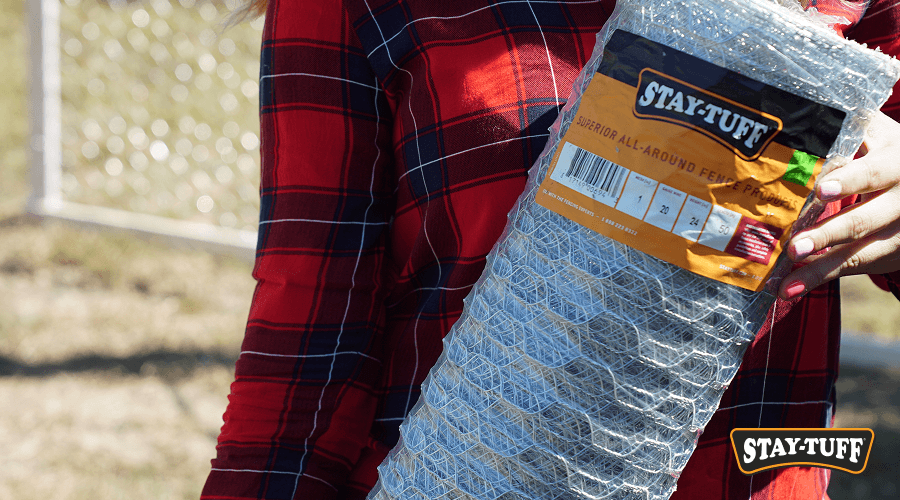
STAY-TUFF products are designed to last and are made to require little maintenance, all while giving you peace of mind: STAY-TUFF provides strength and resistance around the length of your perimeters, keeping your animals safe and unwanted visitors out.
Click here to explore all the STAY-TUFF solutions available for your next project.
Chicken Netting FAQ
Does bird netting work for chickens?
It depends on what you mean. Lightweight plastic bird netting (the kind sold in garden centers) is not suitable for chickens. It tears easily, traps chicken feet and heads, and lasts one season at most. Galvanized hexagonal poultry netting like STAY-TUFF’s 1″ and 2″ mesh is purpose-built for chickens and works well for containment. The two products share a name but are completely different in function and durability.
What kind of netting do you put over a chicken run?
For the top of a chicken run, you have three good options:
- Hex poultry netting (1″ or 2″): Light enough to span 10-foot widths, dense enough to discourage hawk strikes.
- Solid roofing: The ultimate protection — also keeps rain, snow, and droppings from wild birds out of the run.
Can chickens jump over a 6-foot fence?
Most heavy-breed chickens cannot clear a 6-foot fence, but light breeds absolutely can — and will, especially if motivated by food, a rooster, or curiosity.
How long will STAY-TUFF last?
STAY-TUFF’s hexagonal poultry netting is galvanized prior to weaving, which generally yields 10–15 years of useful service in inland climates with normal use. Coastal environments shorten that lifespan due to salt corrosion.
What material is this made of?
Stay-Tuff hexagonal poultry netting is made from 20-gauge galvanized steel wire. The galvanizing process applies a zinc coating to the wire before it is woven into the hexagonal pattern, providing rust resistance and a longer service life than uncoated wire.